

Industry Collections
Oilfield and Energy Services Collections: Getting Paid on Unpaid Field Service Invoices
By Sven Nelson
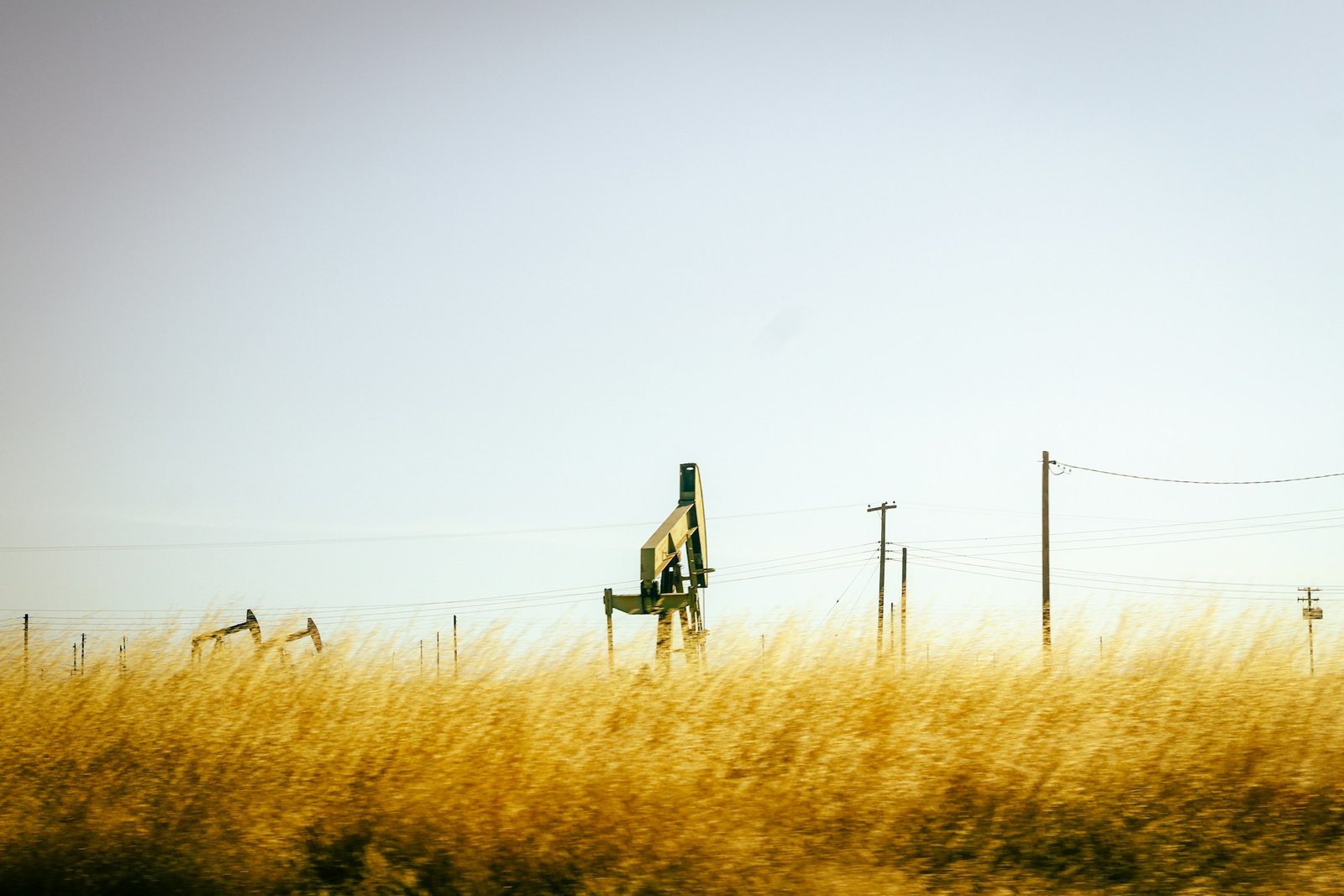
Photo by Alissa Schilling on Unsplash
An unpaid field service invoice in the oil patch is rarely a slow payment problem. It is a timing problem. The company that signed your master service agreement may not be where the money comes from, the well your crew worked on can change operators twice before anyone answers your email, and in most producing states the clock that decides whether you have leverage is not the statute of limitations. It is the window to file a lien on the well, and it runs from the last day your people were on location.
Twenty years in commercial trade credit has convinced me that cash flow problems rarely start in collections. They start upstream, in the order to cash process, and oilfield services is the clearest example I know of. What follows is how the master service agreement, the field ticket and the ownership of the well decide whether an invoice gets paid, what two western well lien statutes actually say, and what to do with an account that has gone quiet. Laws vary by state and change over time, and this is general information, not legal advice.
Key takeaways- The first deadline on an oilfield account is usually the well lien window, not the statute of limitations, and it is measured from the last day of work on location rather than from the invoice date or the due date.
- Wyoming allows a lien statement to be filed with the county clerk within 180 days after the last day materials were delivered or work was performed, on any sum owing above $750, and then requires a civil action within 180 days of that filing (W.S. 29-3-106 and 29-3-109).
- Colorado requires the statement within six months after the labor was performed or the supplies furnished, then suit within six months of filing, and treats an open running account as a single contract so the six months runs for the whole account from its last item (C.R.S. 38-24-104 and 38-24-105).
- The entity that signed your master service agreement is often an operator billing a group of non-operated working interest owners. "The operator has not paid us" and "the owners were never billed" are different problems with different fixes.
- If you have a signed agreement that allows for collection costs or collection agency fees, those charges may be included in the amount sought during collection. If legal action becomes necessary, recoverable fees and costs are determined under applicable state law and are ultimately subject to the court.
Why are oilfield invoices harder to collect than ordinary B2B invoices?
Direct answerThree things compound. The work sits on an asset that can be sold, shut in or re-permitted while the invoice ages. The counterparty is frequently a single purpose entity holding one lease. And the payment terms live in a master service agreement signed years earlier, not in the terms printed on your invoice.
Start with the asset. A wireline crew, a vacuum truck operator, a water hauler and a fabrication shop all deliver into a hole in the ground that someone else owns an interest in. Nothing you supplied comes back. A field service company has already spent the payroll, the fuel and the per diem before the first invoice goes out, and the only thing left to collect against is a balance sheet you have never seen.
Then there is the entity. Operators and their backers commonly hold assets in separate companies, one per project or one per lease. That is ordinary practice, but it means the name on your work order may have little behind it and the people who authorized your crew have no authority over the money. A company man signing a ticket at two in the morning is confirming that work happened. He is not approving a payment.
Finally there is the cycle. When commodity prices turn, receivables across an entire basin age in the same week, in the same controller's inbox. Every vendor on the lease is calling the same person about the same shortage of cash. Position in that queue is most of the game, and it is decided by who moved first, not by who was owed the most.
Who actually owes you when the operator does not pay?
Direct answerNormally the entity named on the master service agreement and the work order, which is usually the operator. That operator may in turn be recovering your cost from a group of non-operated working interest owners through joint interest billings. Your contract claim runs against the party you contracted with. A statutory lien can reach further.
This is the structural fact that makes oilfield collections different, and most generic receivables advice walks past it. Wells are commonly owned by several parties under a joint operating agreement. One of them, the operator, runs the location, hires the service companies, pays the invoices and then bills each of the other owners for their share. Your invoice is one line inside that process.
That produces two failure modes which look identical on an aging report and are nothing alike. In the first, the operator has billed the owners, the owners have paid, and the operator is holding your money. In the second, nobody has been billed, or the owners are not paying either, and there is no money sitting anywhere. The first is a collections problem with a clear target. The second is a solvency problem moving down a chain, and the vendors who spot it earliest are the ones who get paid.
So ask. Ask which entity authorized the work and whether it is still the operator of record, which state oil and gas regulators publish as a free lookup. Ask whether the cost has been billed out to the working interest owners. Wyoming's statute is explicit that where work is done for owners of lands or leases validly pooled or unitized the lien extends to the pooled or unitized interests, and that where the work was for the owner of a working interest in only part of the acreage the lien is restricted to that part. Those distinctions decide whether a filing is worth making, which is why the answer belongs to an attorney in that state.
Does a lien on the well reach anything worth having?
Direct answerIn the producing states that have a well lien statute it reaches well beyond the hardware. Wyoming's lien covers the well, derricks, tanks, pipelines, the whole leasehold and the production and its proceeds. Colorado's covers the well, the machinery and materials furnished, all other wells and buildings, and the owner's interest in the land.
Take Wyoming first, because its statute is unusually specific about money. W.S. 29-3-105 says the lien covers all production attributable to the interest, and the proceeds of production attaching to the working interest as that interest existed on the date labor was first performed or materials were first furnished, along with any well, derricks, tanks, pipelines and the whole of the land or leasehold. Then it does something most lien statutes do not. A lien covering production or proceeds is not effective against a purchaser of that oil or gas until written notice of the claim is delivered by certified mail, return receipt requested, to the purchaser at its principal place of business, naming the claimant, the amount and the interest claimed. Once that notice lands, the purchaser is to withhold payment for oil or gas runs to the extent of the amount claimed until the claim is settled or a court orders otherwise. The statute reaches the revenue stream, not just the iron.
Colorado's article is built differently. C.R.S. 38-24-101 gives the lien to anyone who performs labor on or furnishes machinery, material, fuel, explosives, power or supplies for sinking, repairing, altering or operating a well, or for constructing, repairing or operating a derrick, tank, pipeline, pump or pumping station, under an express or implied contract with the owner or lessee. C.R.S. 38-24-102 extends the same lien to anyone supplying a contractor or subcontractor, ranks the article's liens equally and then prefers liens for labor over the rest. C.R.S. 38-24-103 says no chattel mortgage or security interest is valid against a person entitled to a lien under the article, while protecting encumbrances already recorded when the lien arose.
One Wyoming detail is worth knowing before anyone gets confident. The statute defines "material" to include casing, tanks, pipelines, fuel, machinery, equipment, tools, bits and supplies, then excludes drilling rigs and hoists and their integral component parts, except wire lines. A drilling contractor's largest asset on location sits outside that definition. Read the definition section before you read the deadline.
How long do you have before the lien window closes?
Direct answerIn Wyoming, 180 days after the last day materials were delivered or work was performed, or from substantial completion, for any sum owing above $750, and then 180 days from filing to commence a civil action. In Colorado, six months after the labor or supplies were furnished to file, and six months from filing to sue.
Those windows are measured from the wrong event, if your habit is to think in invoice dates. W.S. 29-3-106 lets a claimant file with the county clerk of any county where part of the property sits, within 180 days after the last day materials were delivered or work was performed under the contract, or from the date the work was substantially completed as the facts of the case determine, or for an employee or subcontractor, after the last day that person worked at the direction of the employer or contractor. W.S. 29-3-109 then gives 180 days from the filing to commence a civil action. A crew that demobilized in March is well into the first window by the time a net 60 invoice is merely late.
Colorado measures the same distance differently and gives something back. C.R.S. 38-24-104 requires the statement within six months after the machinery, materials, fuel, explosives or supplies were furnished or the labor performed, containing a just and true account of the amount due after all credits, a description of the property good enough to identify it, and a verification by affidavit. The subsection that matters most to a recurring vendor comes next: an open running account constitutes a single contract, the lien relates back to the first item furnished, and the six month period runs for the whole account from the date of the last item. A service company working the same operator's leases month after month is not racing a separate clock for every ticket. C.R.S. 38-24-105 then requires suit in the district court of the county where the statement was filed no later than six months after that filing.
Two points carry into any other state. Every producing state writes its own act, and the windows, the measuring point and the dollar floors genuinely differ, so a deadline learned in one basin tells you nothing about the next. And a lien is a filing made by a lawyer in that state. It is leverage with an expiry date, not a collection strategy. Construction creditors face the same structure on a different statute, covered in the construction collections guide, and the limitation periods for suing on the debt are in the statute of limitations by state table.
What does your master service agreement decide before any of this?
Direct answerMore than your invoice does. The master service agreement sets payment terms, the audit and dispute window, the notice address, what counts as acceptance of the work, and whether a signed field ticket is a condition of a valid invoice. A customer who disputes an invoice late is usually disputing under a clause you already agreed to.
The field ticket is the document the whole account rests on. It records what equipment went out, who was on the crew, how many hours and what consumables were used, and it carries the signature of someone on location. An unsigned ticket is where almost every oilfield dispute lives, because it converts a documented fact into an argument about memory, and that memory belongs to two people who have both moved on. The fix is upstream and unglamorous: tickets signed before the crew leaves, legible names rather than initials, and the ticket attached to the invoice every time.
Then read your own agreement before you call anyone. Master service agreements frequently carry an audit right with a stated window, a notice provision naming where formal notices must go, and in the subcontract chain a clause conditioning payment on the upper tier being paid first. Sending a demand to accounts payable while the agreement names a different notice address is a free opportunity for a customer to ignore you.
The honest version is that if your only real problem is that nobody signed the ticket, a collection agency is not your first call. Fix the paperwork, get the work acknowledged in writing, then place the account if it is still unpaid. Our resources page has the credit application and collection letter templates for the upstream side of this, and the credit application is the cheapest leverage a field service company can get, because it is signed at the moment the customer wants something from you.
What should an energy services company do the week an invoice goes past due?
Direct answerFix three dates: the last day your crew was on location, the date of the last payment on the account, and the date of the signed field ticket. Confirm the operator of record today. Put the account on credit hold so new work stops blurring the record. Then decide whether to work it or place it.
Here is the order I would work it in. First, establish the dates, because every deadline above is measured from one of them: last day on location, last payment received, date the ticket was signed, date the invoice was delivered and to which address. Second, confirm who you are dealing with now. Pull the current operator of record from the state's well records, check the legal entity name and registered agent against your master service agreement, and find out whether your contact still works there. An email that has not bounced is not evidence that anyone is reading it.
Third, stop the bleeding. A credit hold on a customer who has gone quiet is not aggression, it is the only way to keep the balance from growing while the leverage shrinks, and it fixes the date the clocks run from. Fourth, escalate deliberately. Accounts payable cannot create money that is not there. The conversation that changes an outcome is with the controller or the owner, about what gets paid in what order. Put the demand in writing, send it to the notice address the agreement names, and give it a real deadline.
Fifth, decide on a date rather than drifting. The most common mistake I see is a vendor who keeps an account in house for nine months because the relationship feels worth protecting, then places it after the operator has already decided which vendors it intends to keep. The same pattern shows up in equipment rental and in unpaid freight invoices, and in all three the cost of waiting is not the time value of the money. It is the queue position.
When should you hand an oilfield account to a commercial collection agency?
Direct answerWhen your own process has stopped producing new information, when a promised payment date has slipped twice, or when a lien or limitation window is approaching. Placing earlier recovers more, because the account is still inside the period where the operator needs your crews back on location next quarter.
A third party changes the conversation in a way an internal collector cannot, and on commercial accounts it does so without damaging a relationship worth keeping. A professional demand says the creditor has stopped absorbing the delay and has committed money to the problem. That is a different signal from a ninth statement.
That is also why it is important to use a certified commercial collection agency. Sven works with C2C Resources, which is certified by the Commercial Law League of America, endorsed by the International Association of Commercial Collectors, carries a $500,000 surety bond, and holds collection licenses in the states that require them. C2C has collected more than $1 billion for over 35,000 clients since 2002, and its collectors average more than 25 years in commercial accounts, so the person calling your customer has worked this cycle before.
We work commercial claims from $1,000 to hundreds of thousands of dollars, under 120 days past due, on contingency, so there is no fee unless we collect. Commercial (B2B) collections only. We do not collect consumer debt. Yes, we collect internationally. Talk to us about your specific account. The states and regions we cover are listed on the where we collect page, and the industries we serve page shows the rest of the sectors we work.
Prefer the phone? 866-341-6316. Or schedule a free consultation online. You can see what happens after you place a file on our commercial debt collection services page.
Frequently asked questions
Is an oil and gas lien the same thing as a mechanic's lien?
In most producing states it is a separate statute with its own scope and its own deadlines. Wyoming puts well liens in Title 29, Chapter 3, which covers mines, quarries and oil, gas or other wells. Colorado puts them in Title 38, Article 24, Lien on Wells and Equipment, which sits apart from the general mechanics' lien article. Assuming the construction deadline you already know applies to a well is one of the more expensive mistakes a field service company can make.
Our customer is a drilling contractor, not the operator. Does that change anything?
It changes who you sue and it can change what you can lien. Your contract claim normally runs against the party you contracted with. On the lien side, Wyoming gives a person who furnishes or rents materials or provides work under contract with a contractor or subcontractor a lien on the same property the contractor's lien may attach to, and Colorado gives a supplier to a contractor or subcontractor a lien to the same extent as the original contractor. Get the chain in writing before you decide anything.
We add a service charge to past due statements. Does that help on an oilfield account?
It depends on your terms. If your invoices are due upon receipt, a state's statute may allow a charge with nothing in writing, and you would need to check that state's statute before relying on it. If you extended credit terms such as net 30, any service charge or interest has to be in the written credit agreement the customer signed. A charge that appears for the first time on a past due statement is usually the first thing a controller disputes, and on a master service agreement it can also trigger the audit clause.
The well was sold to another operator. Is our money gone?
Not automatically, and this is the point at which to stop guessing and start documenting. Your contract claim still runs against the party you contracted with. A statutory well lien attaches to interests as the statute defines them, and Wyoming measures the proceeds of production against the working interest as it existed on the date labor was first performed or materials were first furnished. Which of those routes is open on your account is a question for an attorney in that state, and the answer gets worse the longer you wait.
What size of claim can you help with?
We work commercial claims from $1,000 to hundreds of thousands of dollars, under 120 days past due, on contingency, so there is no fee unless we collect. Commercial (B2B) collections only. We do not collect consumer debt. That covers field service, rental, hauling, fabrication and supply accounts owed by companies across the basins of the western United States. Yes, we collect internationally. Talk to us about your specific account.
Sources: Wyoming Statutes, Title 29, as published by the Wyoming Legislature (29-3-101, 29-3-103, 29-3-104, 29-3-105, 29-3-106, 29-3-109, 29-3-110 and 29-3-111), and Colorado Revised Statutes 2024, Title 38, as published by the Colorado Office of Legislative Legal Services (38-24-101, 38-24-102, 38-24-103, 38-24-104 and 38-24-105), both read October 2026. Laws vary by state and change over time, and the facts of each account matter. This article is general information from a commercial collections professional, not legal advice, and it is not a substitute for advice from an attorney licensed in the state where the well sits. Written by Sven Nelson, The Guy That Gets You Paid.