

Industry Collections
Equipment Rental Collections: Getting Paid on Unpaid and Unreturned Rental Invoices
By Sven Nelson
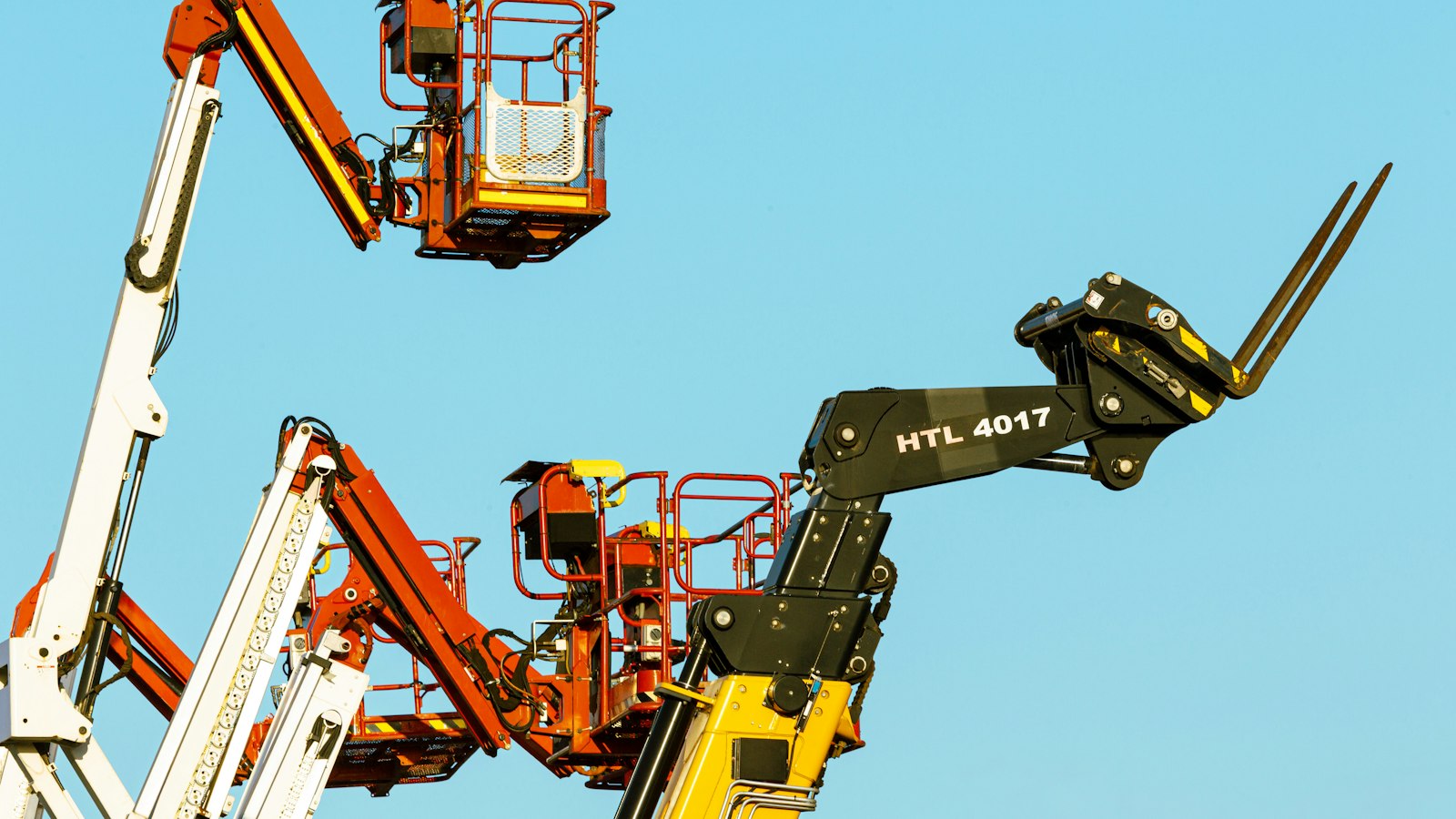
Photo by Troy Mortier on Unsplash
Rental collections have a problem almost no other industry has. In most commercial debt, the amount is fixed the day the invoice goes out, and everything after that is an argument about whether it gets paid. On an unreturned rental, the number keeps climbing while the argument is happening.
That single difference drives most of what goes wrong on these accounts. Rental houses wait longer than they should, because every week of waiting technically adds revenue to the ledger. Then at some point the customer looks at a balance that has doubled, decides it is unreasonable, and stops answering the phone entirely. Here is how to work these accounts so that does not happen.
Key takeaways- A rental balance that is still growing is not a reason to wait. It is the reason to move early, because a customer who could have paid three weeks of rent often cannot pay twelve.
- Unpaid rent and unreturned equipment are two different problems that need two different decisions. Work out which one you actually want solved before you call.
- The signed rental agreement decides what you can claim. Pull it first, every time, and quote the number it supports rather than the number your system has accumulated.
- Equipment on a stalled jobsite is usually a payment chain problem rather than a refusal. Finding out who has not paid whom tells you how long this will take.
- If you have a signed agreement that allows for collection costs or collection agency fees, those charges may be included in the amount sought during collection. If legal action becomes necessary, recoverable fees and costs are determined under applicable state law and are ultimately subject to the court.
Why do rental accounts go bad differently from other invoices?
Direct answerBecause the debt is still being created. On a normal sale the exposure is capped the moment you deliver. On an open rental the balance grows every day the equipment is out, so a small problem becomes a large one without anybody doing anything, and the customer's ability to clear it falls as the number rises.
Think about what that does to the conversation. A contractor who went quiet owing you three weeks on a skid steer is in a fixable situation. The same contractor four months later owes a number that looks, to them, like a penalty rather than a bill. People do not negotiate with a figure they think is unfair. They avoid it.
There is a second difference that matters just as much. Your asset is in somebody else's possession. In almost every other kind of commercial collection the goods are long gone and the only question is money. In rental, the machine sitting on a yard somewhere is both your exposure and your leverage, and it is depreciating while you decide what to do about it.
What is the first thing to check on a past due rental account?
Direct answerThe signed rental agreement, before you make any call or send any demand. It tells you the rate that applies after the return date, whether damage waiver and delivery charges are recoverable, what the customer agreed about equipment they fail to return, and whether collection costs were agreed in writing. Everything you can legitimately claim comes from that document.
This sounds obvious and it is skipped constantly, usually because the balance is sitting right there in the rental software and it is quicker to read the screen. The screen shows what the system accrued. The agreement shows what the customer actually agreed to, and when those two differ, the difference is the part of your claim that falls apart under any pressure.
Three things to establish while you have it open.
- What the post-return-date rate is. Many agreements keep charging the agreed rental rate until the equipment comes back. Some say something different. Know which yours says before you quote a total.
- What was signed, and by whom. A counter ticket signed by a foreman is not always the same contract as the credit application signed by an owner, and on a disputed account that distinction gets raised quickly.
- Whether service charges were agreed in writing. If you rent on credit terms such as net 30, any service charge or interest has to be in the written agreement before you can demand it. If your invoices are due upon receipt, a state statute may allow a charge even where nothing was agreed in writing, and you should confirm that against that state's own statute before you put a figure in a letter.
Do you want the equipment back or the money?
Direct answerDecide explicitly and early, because the two goals push in opposite directions. Recovering the machine stops the balance growing and returns a re-rentable asset. Pursuing the money accepts that the equipment may be gone and treats the whole thing as a debt. Drifting between the two for months is what produces the worst outcome of all.
The honest version of this decision is less about principle than about arithmetic.
Recovery usually wins when the machine still has real value, you know where it is, it is in a condition worth collecting, and you have demand for it. A unit back on the yard and re-rented next week is worth more than a larger claim you may collect part of in six months.
The money claim usually wins when the equipment is older, when it has been damaged, when it has genuinely disappeared, or when the cost and hassle of physically retrieving it from a distant or hostile site exceeds what the unit is worth. In that case the sensible move is to stop the clock, fix the amount, and work it as a commercial debt.
What costs rental companies the most is choosing neither. Three months of "we are still trying to get it back" while nobody formally pursues either the equipment or the balance is three months of depreciation, three months of a growing number the customer will later dispute, and three months of recovery odds falling.
What do you do when the equipment is on a stalled jobsite?
Direct answerEstablish who has stopped paying whom, and write down where the equipment is. On a stalled project the renter has usually not been paid by someone above them, which means your account is one link in a chain. Knowing where the break is tells you whether this resolves in weeks or becomes a long claim.
This is the most common hard case in rental collections and it is rarely a refusal to pay. It is a contractor who cannot pay you because a general contractor or an owner has not paid them, and who is now spending their energy on that fight rather than on your invoice.
Two practical moves make a real difference here.
First, document the location in writing the moment you know it. An email to your customer confirming where the equipment is, what the current balance is and what the agreement says about return, is a two minute job that becomes the most useful document in the file if this ever goes further. Months later, when the site has changed hands and three people have left the company, nobody will be able to reconstruct it.
Second, ask directly where the break in the chain is. Most contractors will tell you, because it is not their fault and they would rather you knew. If the answer is that the owner has not funded the project, you are looking at a long timeline and should act accordingly. If the answer is vague, that is information too.
Whether equipment supplied to a project supports a lien claim depends on the state, and the deadlines involved are often short and run from something that has already happened. That is a question for a construction attorney in that state rather than a general rule. Our guide to construction collections and the lien deadline covers how those timelines behave on project work, and the same lesson applies here: the date you need to know is almost always earlier than you expect.
When should a rental account go to a collection agency?
Direct answerWhen the responses stop producing new information. If your last several contacts produced no payment, no return date and no dated commitment, internal collection has done what it can. For rental accounts that point usually arrives sooner than it does elsewhere, because the balance is still growing while you wait.
Timing matters more in this industry than in most, and the reason is the arithmetic above. Every month you hold a rental account in-house, two things get worse at once: the customer's ability to pay the total, and the age of the claim. Age is the single strongest predictor of what gets recovered, and rental is the one place where the amount gets worse at the same time.
We work commercial claims from $1,000 to hundreds of thousands of dollars, under 120 days past due, and that number is worth planning your own escalation around. Most of what arrives at any agency comes in closer to 180 days, well past the point where the odds were best. If you are tempted by anyone quoting a hard recovery number instead, be careful: a suspiciously high published rate usually means the agency is making it up.
It is also worth saying when placement is the wrong answer. If your past due rental balances are high because counter tickets get signed by whoever is standing there, because credit applications are thin, or because nobody runs a return-date report, then an agency recovers some money and you meet the same problem next quarter. That is a process problem, and it is cheaper to fix than to collect around.
That is why it is important to use a certified commercial collection agency. Sven works with C2C Resources, which is certified by the Commercial Law League of America, endorsed by the International Association of Commercial Collectors, carries a $500,000 surety bond, and holds collection licenses in the states that require them.
What should a rental company change to stop this happening?
Direct answerRun a return-date report every week and act on it, make sure the person signing at the counter is covered by the credit agreement you rely on, and set an internal age at which an account automatically escalates. The accounts that go badly wrong are almost never decisions. They are accounts nobody was watching.
Three changes do most of the work.
- A weekly overdue-return report that somebody owns. Not a screen anyone can look at, a report one named person works through. Equipment past its return date with no contact is the earliest signal you get.
- Paperwork that matches reality. If field staff sign for equipment, the credit agreement needs to cover that. This is the single most common weak point when a rental claim is challenged.
- An escalation age that is automatic. Pick a number of days past due at which an account moves out of normal follow up, and hold it. The point of a fixed rule is that it removes the decision from the month when it is hardest to make.
None of that is complicated. It is just the part that gets skipped while the yard is busy, which is exactly why the accounts that arrive for collection so often look identical.
Prefer the phone? 866-341-6316. Or schedule a free consultation online. You can see how the process works on our commercial debt collection services page, and the resources page has templates for the paperwork side of this.
Frequently asked questions
Can I collect rent for the days after the customer should have returned the equipment?
Usually yes, if your rental agreement says so. Most agreements keep charging at the agreed rate until the equipment is returned or the customer pays for it, and that is the clause that matters most in a rental dispute. Pull the signed agreement before you quote a figure, because the number you can actually support is the one your paperwork describes, not the one your system has accumulated.
What if the equipment is sitting on a jobsite the renter does not control?
That is common and it changes the order of operations. The renter still owes you under the agreement whether or not they can reach the machine, but recovering the machine may mean dealing with a general contractor or a property owner who has no contract with you. Document where the equipment is as soon as you know, in writing, because the location becomes harder to establish every week that passes.
Should I try to get the equipment back or just collect the money?
Decide deliberately rather than drifting. If the machine is high value, in reachable condition and you have somewhere to re-rent it, recovery usually beats a growing invoice. If it is older, damaged or genuinely gone, chasing it can cost more than it returns and the money claim is the better route. What does not work is doing neither for three months while the balance builds.
Do rental companies have lien rights on a construction project?
In many states equipment supplied to a project can support a lien claim, but the rules, the deadlines and what counts as lienable differ sharply from state to state and some of them are short. Treat it as a question for a construction attorney in that state rather than a general rule, and ask early, because the deadline usually runs from something that already happened.
What size of claim can you help with?
We work commercial claims from $1,000 to hundreds of thousands of dollars, under 120 days past due, on contingency, so there is no fee unless we collect. Commercial (B2B) collections only. We do not collect consumer debt. Yes, we collect internationally. Talk to us about your specific account.
Laws vary by state and change over time, and the facts of each account matter. This article is general information from a commercial collections professional, not legal advice, and it is not a substitute for advice from an attorney in the relevant state. Written by Sven Nelson, The Guy That Gets You Paid.