

Industry Collections
Collecting Unpaid Freight Invoices: The 18-Month Clock, Section 7 and Who Actually Owes You
By Sven Nelson
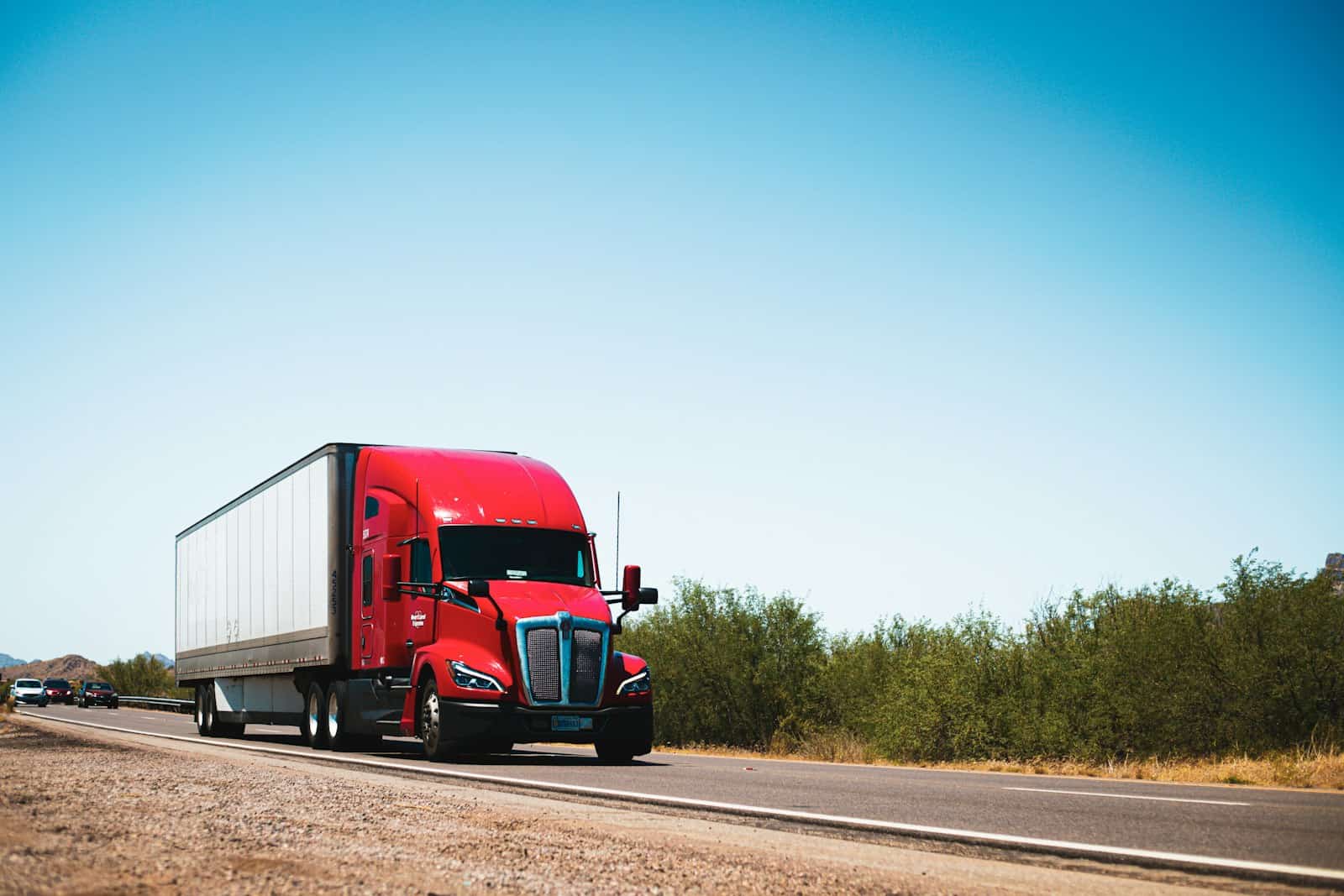
Photo by Tom Jackson on Unsplash
Collecting unpaid freight invoices is a race against a clock most carriers do not know exists. Under federal law a motor carrier has 18 months from delivery to file suit for its charges, and the party that actually owes the money is not always the one whose name is on the load. Get the paperwork right, know who is liable, and place the account while a lawsuit is still an option.
Freight is one of the few industries where we keep dedicated collectors, because it does not behave like other B2B receivables. A trucking company or broker that is owed money is dealing with a bill of lading, a rate confirmation, a consignee that may or may not be the customer, and a federal statute that overrides the state rules most creditors rely on. This is how we work those accounts, and how you should before they reach us.
Key takeaways- A carrier must begin a civil action to recover its transportation charges within 18 months after the claim accrues, and the claim accrues on delivery or tender of delivery, under 49 U.S.C. 14705.
- Who owes the freight bill is set by the shipping documents and 49 U.S.C. 13706, not by who you sent the invoice to. The Section 7 non-recourse box on the bill of lading can shift that liability.
- Most unpaid freight bills trace to a broker that stopped paying, a double-brokered load, or paperwork the payer used as a reason not to pay: missing proof of delivery, unapproved accessorials, a rejected lumper receipt.
- The winning file is the rate confirmation, the signed bill of lading, the proof of delivery and every accessorial approval. Without those, the balance is an argument, not a claim.
- Place freight receivables early. The 18-month clock makes waiting until the account is a year old a bad bet.
Who is actually liable for an unpaid freight bill?
Direct answerThe party that contracted for the transportation, which is usually the shipper or the broker that tendered the load, subject to the rules in 49 U.S.C. 13706. A consignee that accepts delivery can also be liable for charges billed at delivery, unless it gave the carrier written notice before delivery that it was only an agent and named the beneficial owner. The documents decide it.The first question on every freight claim we take is not “how much” but “who.” A carrier hauls a load for a broker, invoices the broker, and the broker goes dark. The carrier then wonders whether the shipper on the bill of lading owes the money, or the consignee that signed for the freight, or only the broker. The answer depends on what the bill of lading says, what the rate confirmation says, and on the federal liability rules.
Section 13706 sets up a tiered structure. When property moves from a shipper or consignor to a different consignee, liability for the rates is “determined under this section.” A consignee that is only an agent, with no beneficial title to the goods, is liable only for the rates billed at the time of delivery, and it can limit even that by notifying the carrier in writing before delivery that it is an agent and naming the beneficial owner. Where additional liability lands on the beneficial owner, the statute says it attaches “regardless of the bill of lading or contract under which the property was transported.”
That is the law in plain terms. In practice, the party you can actually collect from is the one you have a contract and a paper trail with, so the rate confirmation and the bill of lading matter more than any theory of who should pay.
What does Section 7 on the bill of lading change?
Direct answerSection 7 is the non-recourse box on the standard bill of lading. When the shipper signs it, the carrier agrees to look to the consignee for payment and gives up recourse against the shipper. If the box is not signed, the shipper generally stays on the hook. Whether Section 7 was signed is one of the first things a freight collector checks.The uniform straight bill of lading that most of the industry still uses carries a short paragraph, commonly called Section 7, that says the carrier shall not make delivery without payment of freight and all other lawful charges when the shipper signs the box. Signed, it turns the shipment into a collect-on-delivery arrangement from the shipper’s point of view: the carrier is supposed to collect from the consignee before releasing the freight, and if it delivers without collecting, it has weakened its own position against the shipper.
Carriers and brokers get burned here in two ways. Drivers deliver loads with a signed Section 7 without collecting, and the back office does not find out until the invoice ages. Or the box is blank, the shipper is clearly liable, and the carrier spends six months chasing a consignee that never owed anything. Pull the bill of lading first. The box is a two-second read that decides who to pursue.
How long does a carrier have to sue for unpaid freight charges?
Direct answerEighteen months. Under 49 U.S.C. 14705(a), a carrier “must begin a civil action to recover charges for transportation or service provided by the carrier within 18 months after the claim accrues,” and under subsection (g) the claim accrues “on delivery or tender of delivery.” That is far shorter than most state limitation periods on business debt.This is the number that surprises trucking clients most. Creditors in other industries work with state statutes that often run three to six years. A motor carrier’s claim for its own charges runs 18 months from the day the freight was delivered or tendered. A load delivered in March has to be in court by the following September, or the leverage that comes with a credible lawsuit is gone.
Two cautions. First, the 18-month rule governs the carrier’s action for its charges. A broker collecting from a shipper, or a dispute over damage, may sit under different rules, and state law can still matter for parts of a claim. Second, laws change and every set of facts is different. None of this is legal advice. When a large freight balance is aging, confirm the deadline with transportation counsel before you rely on it. What is not in doubt is the direction: freight claims must move faster than almost any other commercial receivable.
| Milestone | Freight claim | What it means |
|---|---|---|
| Delivery or tender of delivery | Claim accrues (49 U.S.C. 14705(g)) | The clock starts the day the freight is delivered, not the invoice date |
| Month 2 to 3 | Internal collection cadence exhausted | The account should already be placed or in final demand |
| Month 18 | Deadline to begin a civil action (49 U.S.C. 14705(a)) | After this, a lawsuit for the charges is generally off the table |
Why do freight invoices go unpaid in the first place?
Direct answerBroker failures, double-brokered loads, and paperwork the payer can point to as a reason not to pay. Missing or unsigned proof of delivery, accessorial charges nobody approved in writing, lumper receipts that do not match, and offsets for cargo claims account for most of the freight balances we see. Cash-flow trouble at the payer is usually underneath it.Freight payers rarely refuse to pay outright. They find a reason. The invoice references a load number that does not match the rate confirmation. The proof of delivery is unsigned or unreadable. Detention was billed without the written approval the broker-carrier agreement requires. A lumper receipt is missing. A cargo claim is pending, so the whole invoice is held. Each one is a small, fixable gap, and each one buys the payer another 30 days.
Then there is the broker that simply runs out of money. A carrier can be current with a broker for two years and then have four loads go unpaid in a month. When a broker fails, its federally required financial security, a $75,000 surety bond or trust fund under 49 CFR 387.307, becomes the target, and there is a window to file a claim against it before it is exhausted by every other carrier with the same problem. That is a race a carrier does not want to run alone.
What paperwork wins a freight collection?
Direct answerThe rate confirmation or broker-carrier agreement, the bill of lading as signed at pickup, the proof of delivery signed at the consignee, written approval for every accessorial, the invoice itself, and the correspondence. With that file, a freight claim is strong. With a bare invoice and a load number, it is a negotiation.Here is the file we ask every carrier and broker to send with a placement:
- The contract. Rate confirmation for the load, and the broker-carrier or shipper agreement it sits under, including payment terms.
- Bill of lading. The version signed at pickup, with the Section 7 box visible.
- Proof of delivery. Signed and dated by the consignee, legible, with any exceptions noted.
- Accessorials. Written approval for detention, layover, lumper, TONU or any other charge beyond linehaul, and the receipts behind them.
- Invoice and statement. With load numbers that match the rate confirmation exactly.
- Correspondence. Every email, text and portal message about the load and the payment.
- The payer’s details. MC number, legal entity name, and the accounts payable contact, not the dispatcher.
Carriers that keep this file on every load collect faster on all of them, not only the ones that go bad. If your credit and paperwork process is where the leaks are, that is the order-to-cash problem Sven fixes upstream, and it is what the free consultation covers.
When should a carrier or broker place freight receivables with a collection agency?
Direct answerAt 60 to 90 days past due, after your own cadence has run, and always with the 18-month clock in mind. A commercial collection agency with dedicated freight collectors works the account on contingency, so there is no fee unless money is recovered, and it keeps the legal path open while there is still time to use it.The reason we keep dedicated freight collectors is that a generalist reads a freight file wrong. They chase the consignee on a load where Section 7 was never signed, they do not know to check the broker’s authority and bond, and they treat an 18-month claim like a six-year one. A collector who has worked trucking receivables opens with the bill of lading, checks the MC number and the bond, confirms the accrual date, and knows which party to call first.
That is the service behind our commercial debt collection services for carriers, brokers and 3PLs, and it is why Sven’s own background includes trucking and transportation. If you run an aging report with freight balances older than 60 days on it, send it over. We will tell you which loads are worth placing and which ones are past saving.
Carrier or broker owed on unpaid loads?
Talk to Sven. Dedicated freight collectors, commercial (B2B) claims only, on contingency, so there is no fee unless we collect. Send the aging report and the bills of lading and we will tell you exactly where each load stands against the 18-month clock.
Prefer the phone? 866-341-6316. Or schedule a free consultation online.
Frequently asked questions
Can a carrier collect from the shipper if the broker does not pay?
Sometimes. It depends on the bill of lading, whether Section 7 was signed, the shipper’s contract with the broker, and the liability rules in 49 U.S.C. 13706. Shippers often argue they already paid the broker. The documents decide it, which is why the bill of lading and rate confirmation are the first things a freight collector reviews.
Does the 18-month deadline apply to brokers collecting from shippers?
The 18-month rule in 49 U.S.C. 14705 is written for a carrier recovering its own transportation charges. A broker’s claim against a shipper generally rests on their contract and may fall under different rules. Treat 18 months as the outer limit for any freight receivable and confirm the specifics with transportation counsel.
What is a freight broker bond claim?
Property brokers must keep a $75,000 surety bond or trust fund on file with the FMCSA under 49 CFR 387.307. When a broker fails to pay, carriers can file claims against it. The security is limited and shared among every claimant, so filing early matters. A freight collection agency will typically check the bond as part of working the account.
Should we stop hauling for a customer that is behind?
Stopping service is leverage, and in freight it is often the only leverage that works quickly. Give written notice, keep hauling only against payment of the arrears, and document it. Continuing to haul for a payer that is 90 days behind adds to the balance you will have to collect later.
Can we place a single unpaid load, or does it have to be a batch?
Either. A single large load is a normal placement. Many carriers send the whole list of balances over 60 days and let the agency sort out which are worth working. There is no fee unless money is recovered, so there is no cost to including a load that turns out to be uncollectible.
Sources: 49 U.S.C. 14705 and 13706, and 49 CFR 387.307, reviewed September 2026. Statutes change and facts vary by shipment. This article is general information from a commercial collections professional, not legal advice, and it is not a substitute for advice from a transportation attorney. Written by Sven Nelson, The Guy That Gets You Paid, working with C2C Resources.