

Business Tips
International Debt Collection for US Creditors: How to Collect From a Business Customer Overseas
By Sven Nelson
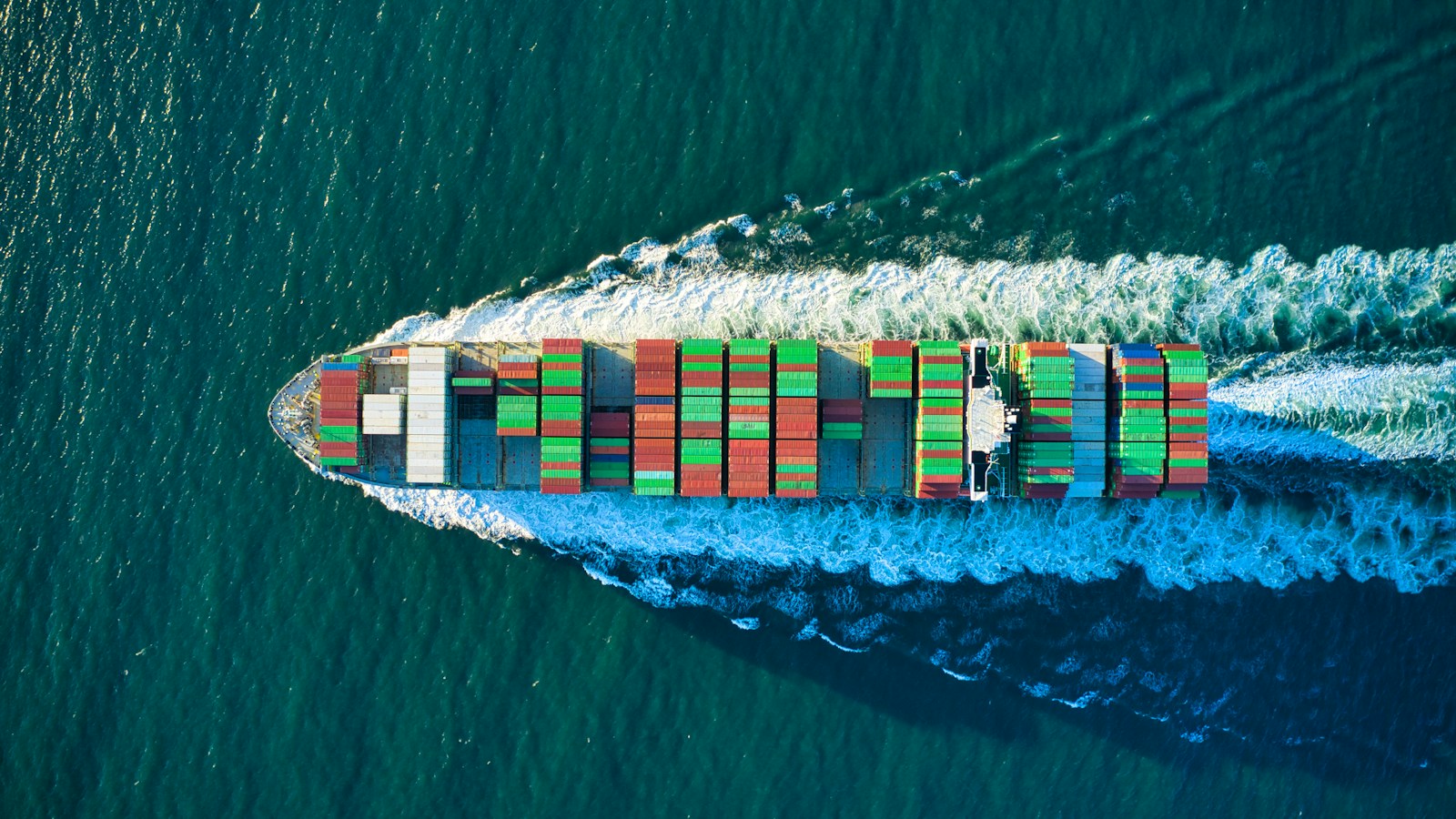
Photo by Venti Views on Unsplash
A US creditor owed by a business customer overseas collects the same way it collects at home: a documented demand, direct negotiation, placement with a commercial collection agency, and only then a decision about legal action. The difference is that every step costs more, takes longer, and depends on paperwork that was signed before the first invoice went out. Get the order right and most overseas accounts settle without a courtroom in either country.
What follows is the version of that process I give credit managers about to sign their first foreign distributor or chase their first unpaid invoice from abroad: what a US judgment is worth overseas, why an arbitration clause travels better than a forum clause, which law governs a cross-border sale by default, and when an international account is not worth pursuing at all. Laws vary by country and by state, and this is general information from a collections professional, not legal advice.
Key takeaways- There is no treaty in force that obliges a foreign court to enforce a US money judgment. The United States signed the 2019 Hague Judgments Convention on 2 March 2022 but has not ratified it, so suing first in your home court is usually the wrong first move on an overseas account.
- An arbitration award is different. The UNCITRAL status page lists 172 parties to the New York Convention, the United States among them since 1970, and that is why an arbitration clause in your credit agreement is the most portable enforcement tool a US creditor has.
- When the seller and the buyer are both in CISG countries (97 parties, the United States since 1 January 1988), a contract for the sale of goods is governed by the CISG unless the contract excludes it. Your terms should say which law governs, in writing, before the sale.
- Serving a US lawsuit on a defendant in one of the 84 contracting parties to the Hague Service Convention goes through the Convention's channels and takes months, not days, which is the practical reason the pre-legal collection phase matters more abroad than it does at home.
- If you have a signed agreement that allows for collection costs or collection agency fees, those charges may be included in the amount sought during collection. If legal action becomes necessary, recoverable fees and costs are determined under the law applied by the court that hears the claim and are ultimately subject to that court.
How does international debt collection work for a US creditor?
Direct answerIn the same sequence as a domestic account, with more care at each step: confirm the exact legal entity that owes you, send a written demand in the contract currency, negotiate directly, place the account with a commercial collection agency that works the debtor's country, and treat litigation or arbitration abroad as the last step, decided on cost.
The sequence does not change because the customer is in Rotterdam instead of Reno. What changes is the cost of each step and the cost of doing them out of order. A demand letter that misnames the debtor or states the balance in the wrong currency is a minor irritation on a Denver account and a month of delay on an overseas one, because every correction crosses a time zone and sometimes a language.
So the first job is identification. Match the legal entity on the signed credit application to the entity on the invoices and the one that received the goods or services. Foreign groups often buy through a local operating company, a trading subsidiary or a free-zone entity, and the name on the email signature is the least reliable of the three. Get the registered name, the registration number where the country publishes one, and the registered address.
Then the demand, the conversation and the placement. On an overseas account I would place earlier than on a domestic one, not later, because the two things that recover international receivables are speed and a third party calling during the debtor's business hours in the debtor's language, and a US credit department has neither after 5 p.m. Mountain time.
Can you enforce a US judgment against a business overseas?
Direct answerNot automatically, and not under any treaty now in force. A US judgment is recognized abroad only if the courts of the debtor's country choose to recognize it under their own law. The United States signed the 2019 Hague Judgments Convention on 2 March 2022 but has not ratified it, so it does not yet help a US creditor.
This is the fact that reorders everything else. A credit manager's instinct is to sue where they are, win, and then collect. On a domestic account that works. On an overseas account the judgment you win in a US court is a piece of paper that a court in the debtor's country may or may not honor, after a second proceeding there, under its own rules about foreign judgments. Some countries are receptive, some are not, and none are obliged by treaty, because the one convention written to create that obligation, the Hague Convention of 2 July 2019 on the Recognition and Enforcement of Foreign Judgments, is signed but not ratified by the United States.
The practical consequence: do not spend money on a US lawsuit against a foreign company that has no assets in the United States until someone who knows the debtor's country has told you what the resulting judgment will be worth there. If the customer has a US subsidiary, US inventory, US receivables or a US bank account, the calculation changes, and that is exactly the kind of fact a collector finds out during the pre-legal phase.
Why does an arbitration clause matter more than a forum clause on an export account?
Direct answerBecause an arbitration award travels and a court judgment does not. UNCITRAL's status page lists 172 parties to the New York Convention, including the United States since 1970. A clause naming a US court gives you a judgment with no treaty behind it. A clause naming arbitration gives you an award with one.
The New York Convention is the reason international contracts lean on arbitration. A party holding an award from a seat in one member country asks a court in another member country to enforce it, and the grounds for refusing are narrow and listed in the Convention itself. The United States joined with two declarations, both visible on the UNCITRAL table: it applies the Convention to awards made in other contracting states, and only to relationships considered commercial under US law. A trade receivable between two companies is commercial, so a US creditor sits squarely inside it.
That does not make arbitration cheap or fast, and for an account in the range most of our clients place it is rarely the first move. But the clause costs nothing to include when the credit application is signed, and it changes the conversation two years later: a customer who knows the award will be enforceable at home negotiates differently from one who knows your US judgment will not be. Ask counsel about the seat and the rules. The point here is that nobody signs an arbitration agreement after they have stopped paying.
Which law governs an unpaid invoice to a foreign customer?
Direct answerFor a sale of goods between parties in two CISG countries, the CISG governs by default unless the contract excludes it. UNCITRAL lists 97 parties; the United States has been one since 1 January 1988. Services contracts fall outside it, and the CISG sets no limitation period, so the forum's law supplies that.
Most US credit applications say nothing about the CISG, which means that on a goods sale to a customer in another contracting state, the United Nations Convention on Contracts for the International Sale of Goods, the CISG, applies whether or not anyone read it. It is a mature sales law, but it is not the Uniform Commercial Code your terms were written against, and the two differ on points a credit manager cares about. One detail from the US ratification is worth knowing: the United States declared under article 95 that it is not bound by article 1(1)(b), so for a US party the Convention applies when both sides are in contracting states, not merely because a conflict rule points at US law.
The decision is simple even if the law is not: say which law governs, in the signed credit agreement, and say whether the CISG applies or is excluded. Silence hands the choice to whichever court ends up with the file. On time limits the CISG is silent too; the period you have to sue comes from the national or state law the court applies, which on the US side varies by state. Our statute of limitations by state table lists those periods. On an international account, plan around the shortest clock that could plausibly apply, not the longest.
How do you serve a lawsuit on a company in another country?
Direct answerIf the destination country is one of the 84 contracting parties to the Hague Service Convention, service of a US complaint goes through the Convention's channels, usually the Central Authority that country has designated, in the form and language that country requires. Count on months. Outside the Convention, service follows letters rogatory or local rules, slower still.
Service is the step credit managers never think about and litigators think about first. In the United States a process server hands over an envelope and the clock starts. Abroad, the Convention of 15 November 1965 on the Service Abroad of Judicial and Extrajudicial Documents governs how a US court's papers reach a defendant in another member country; the HCCH status table lists 84 contracting parties, the United States among them. Each designates a Central Authority, many require translation, and some object to the alternative channels the Convention allows, so the formal route is the safe one. Translation, processing time and local counsel all come before a foreign defendant has even answered, which is why the demand, the negotiation and the agency placement carry so much more of the weight abroad. By the time a lawsuit overseas is a live option, a well-placed account has usually paid.
What should be in your credit application before you sell overseas?
Direct answerThe customer's exact registered name, number and address; the governing law and whether the CISG applies; an arbitration clause or a forum clause chosen with counsel; the contract currency and who pays bank charges; payment terms in days from a defined event; a corporate guaranty from the parent where the buyer is a subsidiary; and the collection costs clause.
Everything above is decided by the paperwork, and the paperwork is decided before the sale. That is the Order-to-Cash point I keep coming back to: cash flow problems rarely start in collections, they start upstream, and on an export account the upstream decisions are the only ones with real leverage. A credit application that names the governing law, provides for arbitration, states the currency and binds the parent company collects itself most of the time, because the customer's own counsel reads it and advises payment.
Three details matter more abroad than at home. The entity name, exactly as registered, because a demand or a filing against a name that does not exist in the local registry goes nowhere. The currency clause, including who absorbs conversion and wire charges, because a customer who short pays a US dollar invoice by the bank fee every month is testing you. And the guaranty: where you sell to the local subsidiary of a larger group, the parent's signature is worth more than any clause in the contract, and it is rarely refused on a new account that wants your terms.
Two more belong on the pre-sale checklist. Export credit insurance exists for exactly this risk; EXIM, the Export-Import Bank of the United States, describes its export credit insurance as protection against buyer nonpayment, and private insurers write it too, so price it before you extend open terms to a new country. And check the Treasury Department's OFAC sanctions programs for the buyer and its country before you ship, because an account you are not legally allowed to be paid on is not a receivable. The credit policies and procedures post covers the domestic checklist, and the resources page has the credit application and demand letter templates to start from.
When should a US creditor not chase an overseas account?
Direct answerWhen the customer has a quality or delivery dispute, because a collector cannot collect a disputed invoice; when the buyer or its country is on a US sanctions list; when the balance is smaller than the cost of acting in the debtor's country; and when the entity you invoiced no longer exists. We say so on the first call.
Part of the job is saying no. A customer in another country who has rejected a shipment in writing, documented a shortage or disputed the specification is not a collection account yet; it is a commercial dispute, and sending it to collections before the dispute is resolved hardens the customer's position and shrinks the eventual settlement. Resolve the dispute, or get the undisputed portion acknowledged in writing, then collect.
The second no is sanctions: if OFAC prohibits the transaction there is no lawful way for the money to reach you, and an agency that says otherwise is the wrong agency. The third is arithmetic. A collector on contingency can work a $4,000 domestic balance profitably; on an overseas account the pre-legal phase can still make sense at that size, but the legal phase almost never does, and a creditor should know that before the first invoice from foreign counsel.
The fourth is the dissolved or restructured entity. Companies in many countries can be wound up, merged or renamed quietly, and the first a US supplier hears of it is a returned demand letter, which is one more reason the registered entity details belong on the credit application rather than in a salesperson's memory. The unpaid SaaS invoices post has the same lesson for software companies, whose customers are overseas more often than any other industry we see.
What if you are the overseas creditor and the debtor is a US company?
Direct answerThe United States has no single national commercial collection law; each of the fifty states sets its own statute of limitations on business debt and its own agency licensing rules. The arbitration and CISG rules above apply in reverse. We work those accounts too; talk to us about your specific account.
Many of the international accounts that reach us run the other way: a manufacturer in Germany, a distributor in Mexico, a software company in India with a customer in Colorado or Oregon that has stopped paying. For that creditor the United States is the foreign country, and the questions are the mirror image: which state's statute of limitations applies, because there is no federal one for a trade debt; whether the state requires the agency to be licensed, because several do; and whether the US customer has assets, which a collector working the account finds out faster than a foreign credit department can.
The reassuring part is that the United States is a party to the New York Convention and the Hague Service Convention, and US courts are used to foreign commercial claimants. The frustrating part is the fifty state systems. The where we collect page lists the states we work, and each Western state guide on this site walks through that state's periods and courts.
How do you vet an international debt collection agency?
Direct answerAsk three things: who exactly will contact the debtor, in which country and in which language; whether the agency is certified and bonded in its home market; and whether it will quote the legal phase separately, with your approval required before anything is filed. A suspiciously high published rate usually means the agency is making the number up.
Search for international collection and you will find pages promising coverage in dozens of countries and recovery figures with a decimal point. Read them the way you would read a credit application: what is verifiable? Who makes the call to the debtor, and from where? What does the agency do when the account needs counsel in the debtor's country, and do you approve that step and its cost in advance? What happens to your money between the debtor paying and you being paid, and in which currency?
That is why it is important to use a certified commercial collection agency. Sven works with C2C Resources, which is certified by the Commercial Law League of America, endorsed by the International Association of Commercial Collectors, carries a $500,000 surety bond, and holds collection licenses in the states that require them. C2C has collected more than $1 billion for 35,000+ clients since 2002, and its collectors average more than 25 years in commercial accounts. International accounts are worked by those collectors and, where an account needs local counsel, through C2C's attorney network, with the client's approval before the legal phase begins. Yes, we collect internationally. Talk to us about your specific account.
If a customer overseas owes your company money, or you are the overseas creditor owed by a US company, the fastest way to find out whether the account qualifies for recovery is a short call. We work commercial claims from $1,000 to hundreds of thousands of dollars, under 120 days past due, on contingency.
Prefer the phone? 855-927-0500. Or schedule a free consultation online. You can see how the process works on our commercial debt collection services page, and the final demand letter templates are a starting point for the written demand that every international account begins with.
Frequently asked questions
Do you collect from businesses outside the United States?
Yes, we collect internationally. Talk to us about your specific account. That runs in both directions: a US company owed by a customer overseas, and an overseas company owed by a customer in the United States. Commercial (B2B) accounts only. Sven works from Phoenix and places international accounts through C2C Resources, whose collectors and attorney network handle the contact in the debtor's country.
Can an international debt collection agency sue a company in its own country?
A collection agency does not file suit itself in a foreign court. What a commercial agency does is work the account to a settlement first, and if that fails, refer it to counsel in the debtor's country through its attorney network, with your approval and a cost estimate before anything is filed. Most international accounts are resolved before that step, which is the point of placing them early.
Does a statute of limitations apply to an international business debt?
Yes, and which one applies depends on where the claim is heard. The CISG, which governs many cross-border sales of goods, sets no limitation period, so the time you have comes from the national or state law the court applies. On the US side that varies by state, and our statute of limitations by state table lists the periods. Treat the shortest plausible clock as the real one.
Which currency should an international demand letter state?
The currency of the contract or invoice, stated exactly as billed, with the invoice numbers, dates and the total in that currency. If your terms say who absorbs bank and conversion charges, say so in the demand. A demand that converts the balance into a different currency at a rate you picked invites a dispute about the number instead of a conversation about payment.
What size of claim can you help with?
We work commercial claims from $1,000 to hundreds of thousands of dollars, under 120 days past due, on contingency, so there is no fee unless we collect. Commercial (B2B) collections only. We do not collect consumer debt. Yes, we collect internationally. Talk to us about your specific account.
Sources, all read November 2026: HCCH status tables for the Convention of 15 November 1965 on the Service Abroad of Judicial and Extrajudicial Documents (84 contracting parties) and the Convention of 2 July 2019 on the Recognition and Enforcement of Foreign Judgments (United States: signed 2 March 2022, not ratified); UNCITRAL status pages for the Convention on the Recognition and Enforcement of Foreign Arbitral Awards (172 parties; United States in force 29 December 1970 with the reciprocity and commercial declarations) and the United Nations Convention on Contracts for the International Sale of Goods (97 parties; United States in force 1 January 1988, declaration under article 95); EXIM export credit insurance; OFAC sanctions programs. Laws vary by country and by state and change over time. This article is general information from a commercial collections professional, not legal advice or a substitute for counsel in the relevant country. Written by Sven Nelson, The Guy That Gets You Paid.