

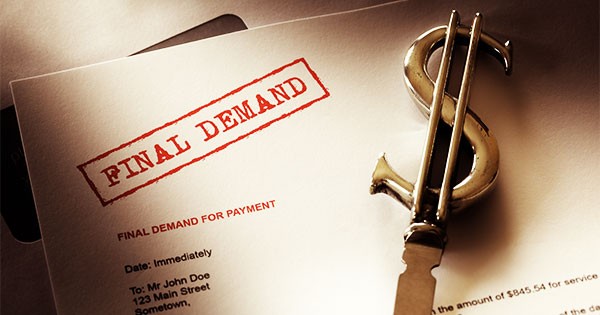
For a variety of reasons some accounts just don’t respond to the usual 90 days of letters, emails or calls. It is important at this point to stick to your policies and not lose credibility by duplicating previous steps. The final step in any collection program should be a final demand and you want to make it count.
We highly recommend that your Final Demand letter be sent in the mail. If the balance is large, send the letter by way of certified mail. This is especially effective if your communication up to this point has been by email as it sets the Final Demand letter apart from other communications, which adds to the sense of urgency.
Here are a few sample templates that you can modify to fit your business and previous collections steps.
FINAL DEMAND TEMPLATE, OPTION 1
Dear [Customer Name],
This matter is critical. Your full attention is required.
We at [Your Company Name] have repeatedly reminded
you of past due invoice [#, ] that was due on [Date] in the amount of [$, ]. To date, we’ve not received payment from you.
IF WE DO NOT RECEIVE PAYMENT IN THE NEXT 10 DAYS, YOUR ACCOUNT WILL BE PLACED WITH OUR COLLECTION AGENCY FOR FURTHER ACTION.
You can avoid further actions on our part by paying the above balance in full today.
Please call us now to make your payment.
Sincerely,
[Your name, business name, address and phone]
FINAL DEMAND TEMPLATE, OPTION 2
Dear [Customer Name],
THIS MATTER IS URGENT. YOUR COMPLETE ATTENTION IS REQUIRED.
Despite our continued requests and patience, your past due balance of [$, ] remains unpaid.
We have reached the point that unless the balance is paid in full or satisfactory payment arrangements are made by [Date], we will have no choice but to refer your account to our collection agency.
This is not a step that we like to take since our goal is to build long-term relationships with our clients. We are hopeful that you will do your part to maintain our relationship and protect your credit rating.
This is our final request for cooperation.
Sincerely,
[Your name, business name, address and phone]
FINAL DEMAND TEMPLATE, OPTION 3
Dear [Customer Name],
Despite our continued requests and patience, your past due balance of [$, ] remains unpaid.
We have reached the point that unless the balance is paid in full or satisfactory payment arrangements are made by [Date] then we will have no choice but to refer your account to our collection agency.
This is not a step that we like to take, but you have failed to honor your commitment to us when we extended your company credit. We did our part and are hopeful that you will do your part now. I am sure you will agree that a good credit rating is important to every business.
This is our final request for cooperation.
Sincerely,
[Your name, business name, address and phone]
What happens when the final demand deadline passes?
Direct answerYou do exactly what the letter said. If the date passes with no payment and no written arrangement, place the account with your collection agency that week. Waiting another month to give them one more chance costs you leverage and recovery odds, because the age of a past due invoice is the strongest single signal of whether it gets paid.
The letter only works if the customer believes it. A lot of accounts reach an agency after two or three final notices, each one followed by more patience. By the time the third one arrives, the customer has learned that the deadline is a suggestion. One letter, one date, and then the account moves.
If the customer calls before the date and wants to talk, that is a good outcome. Get the arrangement in writing with specific amounts and dates. If the first payment on that plan is missed, the account goes out the same day, without another letter. The full process for collecting past due accounts receivable walks through every step before this one.
What documents does a commercial collection agency need?
Direct answerThe agency needs the paperwork that proves the customer agreed to buy, received what they bought, and was asked to pay. That means the signed credit application or contract, the unpaid invoices, proof of delivery or completed work, a statement of account, and a dated record of your collection attempts, final demand included.
Here is the file to pull together before you place the account:
- The agreement. The signed credit application, contract, purchase order or terms and conditions the customer accepted, including the payment terms.
- The invoices. Every open invoice, with numbers and dates that match your statement.
- Proof of delivery or completion. Signed delivery receipts, a signed work order or job completion sign off.
- A statement of account. The aging for that customer, showing what is open, what was paid and what was credited.
- Your collection history. Dates of each call, email and letter, who you spoke to, and a copy of the final demand.
- Anything in writing from the customer. Promises to pay, partial payment offers, and any dispute they raised, even if you think the dispute has no merit.
- Who owes you. The legal business name, the address, the accounts payable contact, and any personal guarantee that was signed.
A complete file does not need to be perfect. An agency can work an account with gaps, but every missing piece is something the debtor can use to delay. The freight version of this list shows how specific it gets in one industry, and our small business collections FAQ covers what happens after you place the account.
We handle business to business claims from $1,000 to hundreds of thousands of dollars, under 120 days past due. There is no fee unless money is collected. You can see each step on the how it works page.
Prefer the phone? 855-927-0500. Or schedule a free consultation online.
Frequently asked questions
How many days should a final demand letter give the customer?
Ten business days is the common choice, and it works because it is short enough to feel real and long enough that nobody can say they never saw it. Whatever number you pick, put the actual calendar date in the letter and act on that date. A deadline you let slide teaches the customer that the next one is optional too.
What documents does a commercial collection agency need to start?
The signed credit application or contract, every unpaid invoice, proof that the goods were delivered or the work was done, a current statement of account, and your notes on every call, email and letter, including the final demand. Add any written promise to pay or written dispute, and the legal name of the business that owes you.
Should I keep calling the customer after I place the account?
No. Once an account is placed, send every call and payment offer to the agency and tell them about any payment that comes to you directly. Two people chasing the same debtor with two different messages is how a settlement falls apart.