

Collection Law by State
Wyoming Statute of Limitations on Business Debt: What Creditors Owed by a Cheyenne Company Need to Know
By Sven Nelson
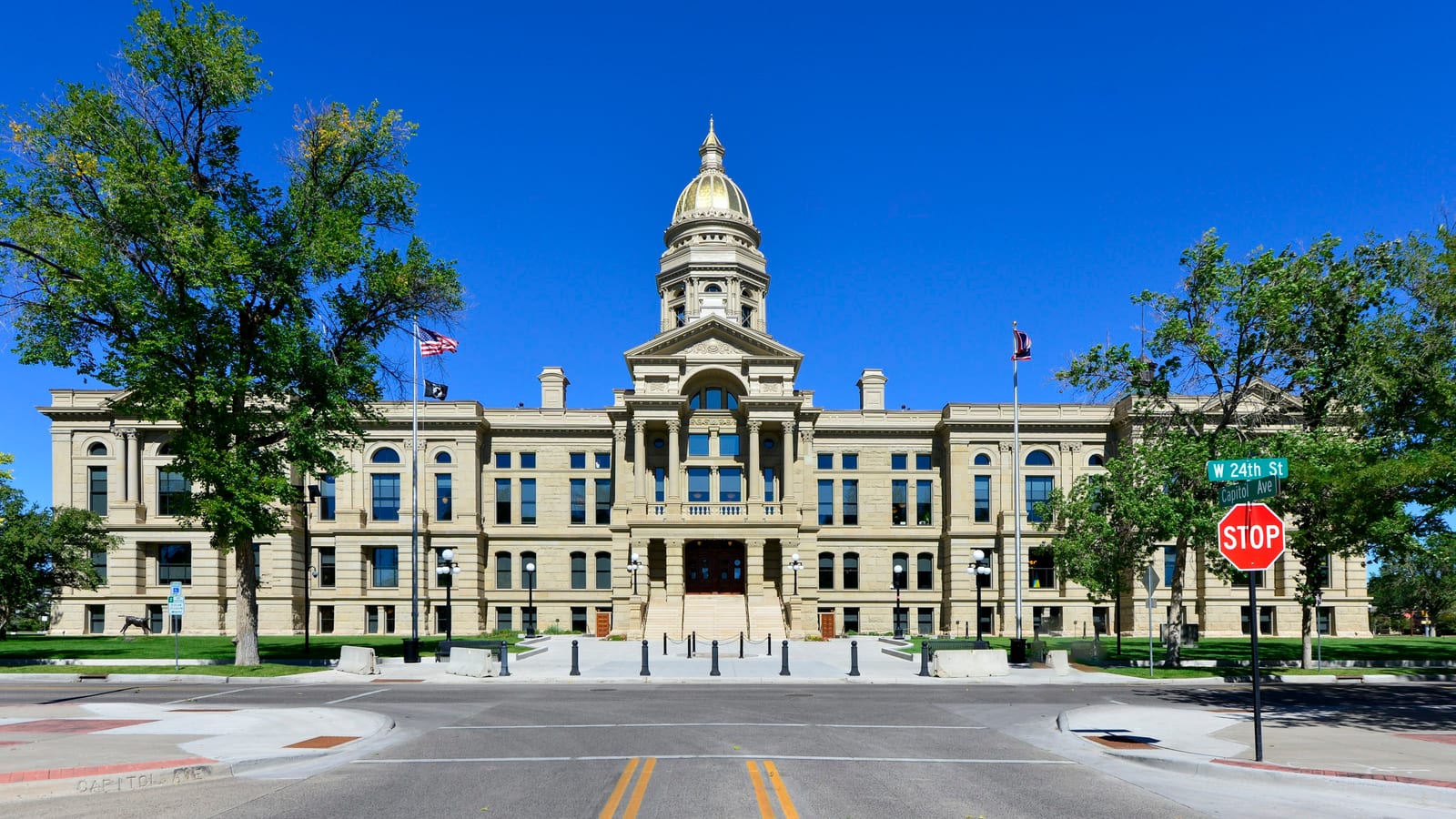
Photo by Pete Alexopoulos on Unsplash
A creditor owed by a Wyoming company has ten years to sue on a contract in writing, eight years on a contract not in writing, which is where an open account of invoices lands, and four years on a sale of goods. A Wyoming judgment goes dormant if no execution issues for five years, and a dormant judgment can be revived for ten years after that.
Those are the longest clocks in the West. Montana gives six and five, Utah six and four, Idaho five and four. Wyoming gives ten and eight, and that generosity is exactly what gets Cheyenne accounts worked too slowly. Below is what the Wyoming Statutes say today, what moves the clock, and what to do with an account that has gone quiet. Laws vary by state and this is general information, not legal advice.
Key takeaways- W.S. 1-3-105(a)(i) gives ten years to an action upon a specialty or any contract, agreement or promise in writing. Section 1-3-105(a)(ii)(A) gives eight years to an action upon a contract not in writing, express or implied, which is where most trade receivables land.
- A contract for the sale of goods gets four years under Section 34.1-2-725, and the original agreement can cut that to as little as one year but cannot extend it. The claim accrues at the breach whether or not the seller knew of it.
- Under Section 1-3-119, a payment on a demand founded on contract, or a written acknowledgment or promise to pay signed by the party to be charged, means the time for commencing an action runs from the date of that payment, acknowledgment or promise. The section is silent on an account the statute has already run on.
- Section 1-3-105(a)(iii) is Wyoming's own rule: an action on a foreign claim, judgment or contract that accrued before the debtor became a Wyoming resident must be brought within five years after the debtor establishes residence here.
- A Wyoming judgment binds the debtor's land in the county from the day it is filed with the county clerk under Section 1-17-302, but under 1-17-307 it goes dormant and the lien ceases if five years pass without an execution. Sections 1-16-502 and 1-16-503 allow revival within ten years of dormancy.
- If you have a signed agreement that allows for collection costs or collection agency fees, those charges may be included in the amount sought during collection. If legal action becomes necessary, recoverable fees and costs are determined under applicable Wyoming law and are ultimately subject to the court.
How long do you have to sue on a business debt in Wyoming?
Direct answerTen years on a specialty or any contract, agreement or promise in writing under W.S. 1-3-105(a)(i). Eight years on a contract not in writing, express or implied, under 1-3-105(a)(ii)(A). Four years on a contract for the sale of goods under 34.1-2-725. A judgment goes dormant after five years without an execution under 1-17-307.
Wyoming draws the line between written and unwritten contracts, the line Idaho, Utah, New Mexico and Montana also draw and Oregon and Washington do not. Section 1-3-105(a)(i): a specialty or any contract, agreement or promise in writing, ten years. Section 1-3-105(a)(ii)(A): a contract not in writing, express or implied, eight. A signed credit agreement or a promissory note sits in the first group. A stack of invoices nobody signed sits in the second.
The figures on our own statute of limitations by state page, compiled by Sven in 2024, match the current section. One correction to a figure you will see elsewhere online: several consumer sites cite subsection (a)(iii) as the general ten year debt rule. It is not. That subsection is a five year rule for debts a person brought with them when they moved to Wyoming, covered below.
Is an open account in Wyoming ten years or eight?
Direct answerEight, unless the obligation is founded on a writing. Section 1-3-105 has no separate line for accounts, so an open account is a contract not in writing under (a)(ii)(A). A signed credit application or a promissory note moves it to the ten year period in (a)(i). Which bucket a file sits in is a question for a Wyoming attorney.
Unlike Utah, which names an open account in 78B-2-307, Wyoming's chapter 3 never uses the word account. The eight year figure for open accounts in every chart, ours included, comes from reading an unsigned running account as an implied contract under (a)(ii)(A). That is the standard reading and the one I plan accounts around.
The signature is worth two years here, more than Montana's one and less than it sounds. A Cheyenne customer who signed your credit application in 2019 and stopped paying in 2024 gives you a claim that runs to 2034 on paper. The money will not wait that long. The signed application is also where your interest, service charge and venue terms live. Get it signed, then work the account as if the clock were two years, not ten.
When does the Wyoming clock start on an unpaid invoice?
Direct answerWhen the cause of action accrues, which under Section 1-3-102 is the point from which every period in the chapter runs. For an invoice that is the day it goes unpaid past its due date. Wyoming's discovery rules in 1-3-106 cover the wrongful taking of personal property and fraud, not a trade account the customer simply ignored.
For a trade creditor the cause of action on each invoice accrues when the customer fails to pay it when due. Nothing in the chapter postpones that start for lack of knowledge on a contract claim; 1-3-106 delays accrual only for the wrongful taking of personal property and for fraud.
Wyoming has no statute that measures an open account from its last item, unlike New Mexico's 37-1-6. The conservative reading, and the one I plan accounts around, is that each invoice ages on its own clock from its due date, so the oldest invoice on a Cheyenne account falls off first. Whether a ledger of reciprocal charges and credits is treated as one running account measured from the last entry is a question for a Wyoming attorney. A finance charge you post on your own side is not activity by the customer either way.
Does a sale of goods get a different period in Wyoming?
Direct answerYes. Section 34.1-2-725 of Wyoming's Uniform Commercial Code requires an action for breach of any contract for sale to be commenced within four years after it accrued. The original agreement may reduce that period to not less than one year but may not extend it, and the claim accrues at the breach regardless of the seller's knowledge.
Title 34.1, Article 2 is Wyoming's enactment of UCC Article 2, which governs the sale of goods and so covers most of the distributors, equipment dealers, building material suppliers and oilfield vendors reading this. Where 1-3-105 would give a signed supply agreement ten years, 34.1-2-725 gives a contract for sale four, so product sold on a signed master agreement to a Cheyenne customer is on the four year clock.
Three things in the section deserve attention. The period can be shortened by the original agreement, down to one year, so a master supply agreement signed years ago can do exactly that. It cannot be extended, so a clause in your own terms claiming ten years does nothing against a goods claim. And the claim accrues at the breach regardless of the seller's knowledge, which for a nonpayment means the due date. Subsection (d) leaves tolling alone, so 1-3-119 and 1-3-116 still apply.
The gap between four and ten is the widest in the West. A distributor that reads the ten year figure on a chart and files in year six on a goods account will meet 34.1-2-725 in the customer's answer.
Does a payment or a signed acknowledgment restart the Wyoming clock?
Direct answerYes. Under Section 1-3-119, when payment has been made upon any demand founded on contract, or a written acknowledgment or promise to pay has been made and signed by the party to be charged, the time for commencing an action runs from the date of that payment, acknowledgment or promise. A payment needs no writing at all.
Section 1-3-119 is explicit about the effect: the time for commencing an action runs from the date of the payment. A $500 check against a $40,000 balance restarts the period, so take the small payment a customer offers to buy time, document how it was applied, and keep working the account. The payment helps you. The time does not.
The acknowledgment side is stricter. The acknowledgment or promise must be made and signed by the party to be charged. A controller's email confirming the balance is a writing, and whether a typed name on it is a signature for this purpose is a question for a Wyoming attorney, so get the email anyway. A phone call promising a check restarts nothing.
What the section does not say matters as much. It is silent on whether a payment made after the period has already expired brings the claim back; Washington says nothing does, New Mexico says a partial payment revives an expired claim, and Wyoming's text does not answer. A creditor holding an expired Wyoming account should ask counsel before treating a late payment as a second chance.
What if the customer moved to Cheyenne, left Wyoming, or the contract names another state's law?
Direct answerThree sections answer that. Section 1-3-105(a)(iii) gives five years from the date a debtor establishes Wyoming residence to sue on a claim that accrued before the move. Section 1-3-116 stops the clock while a debtor is out of the state, absconded or concealed. Section 1-3-117 bars in Wyoming any claim already barred where it arose.
The residency rule is the one most states lack. Under 1-3-105(a)(iii), an action on a foreign claim, judgment or contract that accrued before the debtor became a resident of Wyoming must be brought within five years after the debtor establishes residence here. Cheyenne sits where I-25 meets I-80 and draws contractors, haulers and small operators in from Colorado and Nebraska every year. If one of them owed you money before the move, your clock in a Wyoming court may be five years from the day they became a resident, not the eight or ten the chart shows. Date the move.
The absence rule runs the other way. Under 1-3-116, if a cause of action accrues against a person who is out of the state, or who has absconded or concealed himself, the period does not begin until he comes into the state, and time absent or concealed after accrual is not counted. Whether that reaches a Wyoming company with a registered agent on file while its owner runs the business from Arizona is a question for a Wyoming attorney. Treat tolling as a question, never as time you have.
The borrowing statute is one way. Section 1-3-117 says that if the action is barred by the laws of the state or country where it arose, it is also barred in Wyoming. So a Colorado creditor whose claim died under Colorado's shorter contract period cannot revive it by filing in Laramie County. Wyoming does not do the reverse: unlike Montana and Oregon, which adopted the Uniform Conflict of Laws Limitations Act and will apply another state's longer period, Wyoming's section only shortens. Where more than one state could hear the claim, ask counsel which forum and which clock before anyone files.
How long can a Wyoming judgment be enforced?
Direct answerA judgment binds the debtor's land in the county from the day it is filed with the county clerk under Section 1-17-302. Under 1-17-307 it becomes dormant, and the lien ceases, if no execution issues within five years of the judgment or between executions. Sections 1-16-502 and 1-16-503 allow a dormant judgment to be revived within ten years.
Wyoming does not hand a judgment creditor a flat number of years the way Idaho's eleven or New Mexico's fourteen do. It hands you a maintenance schedule. Under 1-17-302 the debtor's lands within the county are bound from the day the judgment is filed with the county clerk and recorded in the real estate records. Under 1-17-307, if execution is not issued within five years of the judgment, or five years pass between executions, the judgment is dormant and ceases to operate as a lien.
A dormant judgment is not dead. Section 1-16-502 lets it be revived by motion or conditional order, with the lien revived from the filing of the motion, and 1-16-503 bars a revival action more than ten years after dormancy. So a creditor with a judgment against a Cheyenne company that owns its shop or yard has two jobs: keep an execution issuing inside every five year window, and if the lien lapses, move to revive inside the ten. A circuit court judgment gets the same lien once a transcript is filed with the district court clerk and the county clerk under 1-17-306.
Can you take a business debt to small claims court in Cheyenne?
Direct answerYes, within limits. Under Section 1-21-201 the small claims procedure applies in circuit court where the amount claimed, exclusive of costs, does not exceed $6,000, and under 1-21-202(b) a corporation may appear through authorized employees. Circuit court has exclusive civil jurisdiction up to $50,000 under 5-9-128. Larger claims go to district court.
Wyoming gives a commercial creditor three doors, and the thresholds are higher than most of the West. The small claims procedure in Sections 1-21-201 through 1-21-205 covers claims up to $6,000, started by an affidavit reciting the defendant's address, the nature of the claim, the amount due and that demand was made and refused. Section 1-21-202(b) lets a corporation or partnership appear through authorized employees, with or without an attorney, and if one side brings a lawyer the other gets a continuance to find one. No prejudgment attachment or garnishment issues under 1-21-205, but post judgment garnishment in aid of execution does.
Above $6,000, the Circuit Court of Laramie County has exclusive original civil jurisdiction up to $50,000 exclusive of costs under 5-9-128(a)(i), more than three times Montana's justice court ceiling and enough to cover most of the accounts in the range we handle. Above $50,000 the case belongs in district court, which for Laramie County is the First Judicial District under 5-3-101(a)(i), where the business will generally need counsel.
Once a claim moves toward court the interest question gets decided by the contract and by the interest statutes. Section 40-14-106(e) sets interest at seven percent per annum where there is no agreement or provision of law for a different rate, and 1-16-102 puts interest on a judgment at ten percent per year from rendition, or at the contract rate where all parties agreed to one in the contract the judgment is founded on. For most accounts in the range we handle, the right first step is still a professional collection effort, which costs nothing unless it collects and keeps the courthouse in reserve.
Does a collection agency need a Wyoming license?
Direct answerGenerally yes. Section 33-11-102 bars conducting a collection agency in Wyoming without a license from the Collection Agency Board, backed by the bond in 33-11-108. But 33-11-101(b)(vii) excludes from the definition of collection agency any person engaged solely in the collection of business debts, so a commercial-only agency may fall outside the Act. Ask the agency which it is.
Wyoming's Collection Agency Act licenses agencies through the Collection Agency Board, requires a $10,000 surety bond or cash deposit under 33-11-108 covering every debt placed with the licensee, and under 33-11-114 lets a licensee take an assignment of a claim and sue on it in its own name. The Act defines a business debt separately at 33-11-101(a)(ii), as an obligation arising from a credit transaction between business or commercial enterprises, and then at 33-11-101(b)(vii) says the term collection agency does not include any person engaged solely in the collection of one or more business debts.
What that means for you: an agency that also collects consumer accounts needs the Wyoming license; an agency that collects only commercial accounts may not, and the Board will not have vetted it. That is why it is important to use a certified commercial collection agency. Sven works with C2C Resources, which is certified by the Commercial Law League of America, endorsed by the International Association of Commercial Collectors, carries a $500,000 surety bond, and holds collection licenses in the states that require them. C2C has collected more than $1 billion for 35,000+ clients since 2002. A suspiciously high published rate usually means the agency is making the number up. Our where we collect page lists the states we work, Wyoming included.
What should a creditor do with a Cheyenne account right now?
Direct answerDate every unpaid invoice from its due date, because Wyoming measures from accrual and has no last item statute. Sort the paperwork into signed and unsigned, which decides ten years or eight, and flag any goods sale, which is four. Note the last payment and any signed acknowledgment. Date any move into or out of Wyoming. Then place it early.
Here is the order I would work a Wyoming account in. First, the invoices: list every open one with its due date, because each accrued the day it went unpaid, and the oldest falls off first. Second, the documents: sort the credit application, purchase orders and invoices into what the customer signed and what it did not; that sort is the difference between ten years and eight, and a goods account is four regardless.
Third, the restart evidence: the date and amount of the last payment, and any signed writing in which the customer acknowledged the balance or promised to pay, because under 1-3-119 the time runs from either one. Fourth, the geography: when the customer came to Wyoming, whether they have left, and whether the contract names another state's law, because 1-3-105(a)(iii), 1-3-116 and 1-3-117 can each move the deadline, and only one of them moves it in your favor.
Fifth, the other deadlines. On a construction or oilfield account the lien windows run far shorter than any of this; Wyoming's well lien statement is due 180 days after the last day on location. Those deadlines are in the western states lien guide and the oilfield collections guide, and they pass while the statute of limitations has barely started.
Sixth, decide. A two year old account has lost most of its leverage whatever the statute still allows, and Wyoming's long periods are how Cheyenne accounts get worked too slowly. The neighboring states are in the Montana, Idaho, Utah and Colorado guides, and the full statute of limitations by state table covers a customer anywhere else.
If a Wyoming company owes you money, the fastest way to find out whether the account qualifies for recovery is a short call. We work commercial claims from $1,000 to hundreds of thousands of dollars, under 120 days past due, on contingency.
Prefer the phone? 855-927-0500. Or schedule a free consultation online. You can see how the process works on our commercial debt collection services page, and the resources page has credit application and collection letter templates for the paperwork side of this.
Frequently asked questions
Is the Wyoming statute of limitations different for a business debt than for a consumer debt?
The periods in W.S. 1-3-105 apply to contracts generally, business or consumer. What differs on a commercial account is the paperwork: a signed credit agreement or promissory note is a contract in writing with ten years, an account built on invoices nobody signed is a contract not in writing with eight, and a sale of goods falls under the four year rule in the Uniform Commercial Code. We handle commercial (B2B) claims only, so this article is written for the creditor side of a business account.
Our Cheyenne customer never signed anything. How long do we have in Wyoming?
Eight years. Section 1-3-105(a)(ii)(A) gives eight years to an action upon a contract not in writing, express or implied, which is where an oral agreement and an account built on invoices land. If what you sold was goods, Section 34.1-2-725 gives four years from the breach, and the customer's own terms may have cut that to as little as one year. Count from the due date of each unpaid invoice unless a Wyoming attorney tells you the account is measured differently.
The customer sent a small payment last month. Did that restart the Wyoming clock?
Yes, if the period was still running. Under Section 1-3-119, when payment has been made upon a demand founded on contract, the time for commencing an action runs from the date of that payment. A written acknowledgment or promise to pay works the same way but must be signed by the party to be charged. The section does not say whether a payment revives a claim the statute has already run on, so treat an expired account as a question for counsel, not as revived.
Can we charge interest on a past due Wyoming invoice if our terms never mention it?
Wyoming sets a legal rate that applies where there is no agreement or other provision of law for a different rate, so a charge at that rate is possible on an invoice that was due on receipt. Where you extended credit terms such as net 30, any service charge or interest belongs in the written credit agreement the customer signed. A charge that appears for the first time on a past due statement is the first thing a customer disputes.
What size of claim can you help with?
We work commercial claims from $1,000 to hundreds of thousands of dollars, under 120 days past due, on contingency, so there is no fee unless we collect. Commercial (B2B) collections only. We do not collect consumer debt. That covers accounts owed by companies in Cheyenne, Casper, Laramie, Gillette, Rock Springs, Sheridan, Green River, Evanston, Riverton, Jackson and the rest of Wyoming. Yes, we collect internationally. Talk to us about your specific account.
Sources: Wyoming Statutes as published by the Wyoming Legislature, wyoleg.gov: Title 1 (1-3-102, 1-3-105, 1-3-106, 1-3-116, 1-3-117, 1-3-119, 1-16-102, 1-16-502, 1-16-503, 1-17-302, 1-17-306, 1-17-307, 1-21-201, 1-21-202, 1-21-205), Title 5 (5-3-101, 5-9-128), Title 33 (33-11-101, 33-11-102, 33-11-108, 33-11-114), Title 34.1 (34.1-2-725) and Title 40 (40-14-106), all read November 2026. Laws vary by state and change over time. This article is general information from a commercial collections professional, not legal advice or a substitute for a Wyoming attorney. Written by Sven Nelson, The Guy That Gets You Paid.